


Frost Protection Fog Liquids
Anti-Freeze Oils
Documents❄️ Anti-Freeze Oil: A mixture of vegetable glycerin, glycol, and dionized water.
(Used for nighttime frost protection.)
🛩️ Aviation Oil: With its white color and bright structure, it provides the highest reflective effect.
(Used during sunrise frost protection.)
✳️ LP Fogging Oil: Used in greenhouses.
(Used during sunrise frost protection.)
Description
Description
❄️Anti-Freeze Oil;
This special formulation, obtained from a mixture of vegetable glycerin, glycol, and demineralized water, features a plant-based formula suitable for the food industry and leaves no residues on products or plants. It contains completely natural ingredients.
It is used outdoors and in greenhouses for anti-freeze purposes. The vapor density (whiteness and thickness) produced by Anti-Freeze Oil is lower compared to other oils. However, it is intended for anti-freeze effect rather than heat reflective purposes. Anti-Freeze Oil contains a specially blended composition that offers enhanced anti-freeze properties compared to standard glycerin. The Anti-Freeze Oil we provide can be used directly, and hence very practically, without any additional mixing or pre-preparation. The special formulation includes natural components such as vegetable glycerin, glycol, and demineralized water, which enhance glycerin’s performance and maximize its anti-freeze effect.
The purpose of using Anti-Freeze Oil is to spray a fine mist over plants overnight, increasing their resistance to cold and delaying frost, freezing, and ice formation. (Cold-delay effect). Reflective effects, on the other hand, are provided by Aviation Oil, which delays heat damage caused by sunrise. By combining both methods, overnight cold and daytime heat damage are both minimized, ensuring gradual cooling and warming, and providing maximum crop frost protection.
✅ Anti-Freeze Oil – Chemical Composition;
Vegetable Glycerin: Forms an invisible thin layer on flowers and crops, lowering their freezing point.
Glycol: Enhances the effect of vegetable glycerin, increases cell sap resistance, and further delays crystallization (freezing).
Demineralized Water: Converts the glycerin-glycol mixture from a gel into a fluid form. Compared to regular water, it is more hygienic and free from bacteria and microbes.
Other Ingredients: In addition to the above, it contains other natural components.
✅ Anti-Freeze Oil – Usage Instructions;
The product is ready to use, requiring no additional mixing or dilution. It is applied for anti-freeze protection when temperatures drop below zero and wind subsides, remaining effective until sunrise. In some regions, radiation frost may last up to 5 hours, while in others up to 3 hours. The overnight consumption amount would depend on regional conditions (how many hours the frost lasts). Typically, application begins when the temperature is around +1°C / +2°C and wind speed falls below 10 km/h. For more detailed guidance on start times, please refer to our explanation: “When to Start Fogging?”
✅ Anti-Freeze Oil, Unique Advantages of the Special Formula;
| Criteria | Propylen Glycol | Vegetable Glycerin |
|---|---|---|
| Pure freezing point | −59 °C | +18 °C |
| Lowering the freezing point of water | Very High | Medium |
| Anti-freeze effect | ⭐⭐⭐⭐⭐ | ⭐⭐⭐ |
| Low-temperature fluidity | Good | Weak |
| Viscosity | Low | Very high |
| Delay of Ice formation | Very efficient | Limited |
| Protection against agricultural frost | Active and Effective | Supportive |
| Safety for Plants | Safe | Fully Safe |
| Main advantage | Real antifreeze effect | Moisture holder, surface protector |
| Main disadvantage | Limited moisture holding capacity | It cannot prevent frost on its own. |
✅ Anti-Freeze Oil Price Information;
- 25 kg Drum: $3.61 / kg
(1 drum price: $90.30, excluding shipping) - 200 kg Barrel: $3.49 / kg
(1 barrel price: $698, excluding shipping) - 1200 kg IBC Tank: $3.36 / kg
(1 IBC tank price: $4.032, excluding shipping)
When stored in a place protected from sunlight, the shelf life is 3 (three) years.
✅ Anti-Freeze Oil Packing Type


🛩️ Aircraft Oil;
Due to its longer molecular chain structure compared to other oil types, it moves more slowly than all other oils; therefore, it drifts less over the field surface and provides longer-lasting protection. The smoke formed after application delivers the highest level of emissivity (reflectivity) with the whitest tone and brightest characteristics, helping to prevent conduction damage (rapid heat transfer). Especially during the time interval at sunrise when red light becomes visible, its use is strongly recommended for 1–2 hours of fogging activity.
At sunrise, the artificial cloud layer must be bright white, dense, and thick. It must block the red light emitted by the sun at the highest possible level. The red light emitted by the sun at sunrise (700 nm wavelength) is the longest and most intense radiation (heat) wavelength. The term “radiation frost” originates from this phenomenon. Although flowers exposed to cold throughout the night may manage to endure low temperatures, the greatest damage is caused by the red light emitted by the sun. This is called conduction damage (heat transfer). Flowers that are cold and lightly covered with ice are suddenly exposed to red light (high heat), causing them to burn very quickly; their cell walls are damaged and they lose vitality.
If, throughout the night, the surroundings of the flowers are coated with a thin film layer of Anti-Freeze Oil providing an anti-freeze effect, and during radiation frost occurring in windless and cloudless weather an intense artificial cloud layer is created at sunrise using Aircraft Oil to form a closed atmosphere, then frost damage caused by conduction at sunrise does not occur.
To give a simple example of conduction damage: place fish in a very hot pan without adding oil. Due to rapid heat transfer (conduction), the fish will burn quickly and stick to the pan, damaging its surface. If oil is added to the pan, a thin oil layer forms between the hot pan and the cold fish. This prevents direct heat contact and creates a delaying effect against burning.
During agricultural frost events, the surface of flowers is very cold. The thin oil layer formed around them with Anti-Freeze Oil cannot immediately transfer the high temperature of sunlight to the flowers at sunrise. There is a layer of anti-freeze oil between the flower and the sunlight that creates a delaying effect. This anti-freeze layer delays heat transfer to the flower surface and prevents flowers from being damaged by sudden heat transfer (conduction). In addition, the reason for preferring the whitest smoke at sunrise and creating a thick artificial cloud layer is to allow flowers to warm up gradually and to delay direct contact of sunlight with the flowers as much as possible.
✅ Aviation Oil Chemical Content;
By extending the molecular chain structure, this oil has been specially designed to minimize conduction damage in agricultural frost protection and does not leave residue on products or plants. Since our thermal fogging machines expose the oil to heat and spray it in vapor form, regardless of which chemical you apply, you cannot leave residue on the crops. The emitted particles and smoke droplets are at the smallest micron sizes. Even if you apply a pesticide with a 90-day harvest interval, it is possible to export your crops on the third day after application and easily pass PPM tests.
✅ Aviation Oil Method of Use;
It is shipped ready for use without the need for any additional mixing or dilution. It is used only for 1–2 hours of protection at sunrise when red light appears. It is applied to prevent conduction damage occurring at sunrise, thanks to its highest level of reflective effect.
✅ Aviation Oil, Superior Qualities;
| Advantage | Short Explanation |
|---|---|
| Long Molecular Chain | Moves slowly, remains on the surface longer |
| Low drifting speed | Provides long-lasting protection without dispersing in the field |
| Thin Film Layer | Covers the crops, buds and flowers evenly |
| High density white smoke | Creates the brightest and densest artificial cloud layer |
| High Emissivity | Effectively blocks red light at sunrise |
| Conduction Delay | Slows sudden heat transfer |
| Gradual Warming | Allows flowers to warm slowly and in a controlled manner |
| Sunrise effectiveness | Ideal for 1–2 hours of fogging during radiation frost |
✅ Aviation Oil Price information;
- 16 Kg Can= 4,54$ / Kg
(Price per Can: $72.64.) - 200 Kg Barrel= 4,39$ / Kg
(Price per barrel: $878)
✅ Aviation Oil Shelf Life;
When stored in a location away from sunlight, the shelf life is 3 (three) years.
✅ Aviation Oil Packaging;

Unlimited possibilities
✳️ LP Fogging Oil;
This product has been developed solely for greenhouse cultivation under cover, for anti-freeze effect and reflector (emissivity) purposes; it is not recommended for open-field applications. Since open-field frost control is more difficult and involves a higher risk of loss, it is recommended to use stronger, higher-performance oil types in combination with the Anti-Freeze Oil and Aircraft Oil mentioned above. LP fogging oil produces dense, bright white smoke, providing high emissivity (reflectivity), and at the same time, it is an advanced-class oil capable of showing anti-freeze effect thanks to its ability to penetrate water molecules. After application, the oil layer does not leave odor or residue. MSDS and PDS technical documents for the product are available. Smoke generated in greenhouses can remain suspended in the enclosed area for approximately 6 hours; however, over time it naturally tends to settle and dilute. Therefore, to maintain density, re-fogging at 3-hour intervals is recommended. To achieve a dense protection volume, it is recommended to use 1 Kg of LP fogging oil per 1 decare of greenhouse area. For example, if the greenhouse is 10 decares, 10 Kg of LP fogging oil are sprayed in vapor form at midnight. Then, 3 hours later, another 10 Kg of LP fogging oil are sprayed in vapor form to increase the density again. For one night of protection in a 10-decare greenhouse, a total of 20 Kg of LP fogging oil will be required.
✅ LP Fogging Oil Price Information;
16 kg can (21 liters) = 5.40 $ / Kg
(Price per can: 86.4 $)
✅ LP Fogging Oil Shelf Life;
When stored in a place away from sunlight, the shelf life is 3 (three) years.
✅ LP Fogging Oil Packaging Type;
Unlimited possibilities
🟥 Need and Cost Calculation Formula;
Recommended consumption rates:
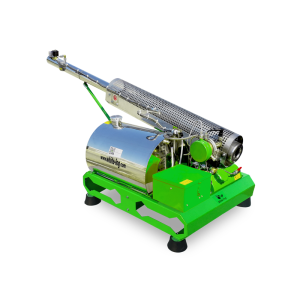
SM600 model hourly consumption: 20 Kg. (Protection capacity: 3 ha)
SM700 model hourly consumption: 60 Kg. (Protection capacity: 10 ha)
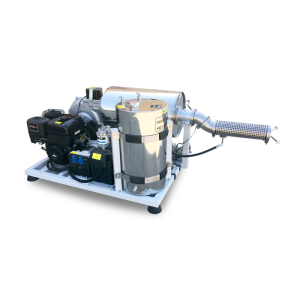
Ultra Fogger model hourly consumption: 100 Kg. (Protection capacity: 20 ha)
Do not reduce the consumption flow rate to save oil costs; comply with the recommended consumption rate. In agricultural frost control, the number and density of smoke particles per cubic meter are very important. If consumption is reduced, the oil will overheat and will not provide raw anti-freeze oiling. Like other low-quality thermal fogging machines sold on the market, it will produce dry smoke. The particles will be very small, like straw smoke. In such a case, the artificial cloud layer will drift easily, smoke density will be low, and the agricultural frost protection rate will decrease. The higher the consumption flow rate of a thermal fogging machine, the more professional the machine is. For example, the Ultra Fogger model is the highest-performance machine commercially available in the world. Its total consumption flow rate can be adjusted up to 500 Kg/hour. However, depending on tractor speed, we recommend fogging at a consumption rate of 100 Kg per hour.
✅ Oil Cost Calculation Example with the Ultra Fogger (5 Hours of Fogging on 200 Decares)
Cost Components:
Vegetable Anti-Freeze Oil:
100 kg/hour × 3 hours = 300 kg
300 kg × $3.36/kg = $1.008
AV Fogging Oil (aviation oil):
100 kg/hour × 2 hours = 200 kg
200 kg × $4.39/kg = $878
Cost of Fog Oil for 200 Decares – 5 Hour Frost Protection
- Cost of frost protection of 200 decares of land for 5 hours: $1.886
- Cost of frost protection of 1 decare for 5 hours: $1,886 / 200 = $9,43
- Cost of frost protection of 1 decare for 1 hour: $9,43 / 5 hours = $1,9
By spraying Anti-Freeze and Aviation Oil in vapor form as a dual combination, the total cost of 5 hours of agricultural frost protection on 200 decares of land—against both cold and heat—amounts to 1186 $ only.
Using the 1 decare 1 hour frost protection cost $1,9 you can easily calculate your own personal cost based on the size of your land and the duration of frost in your region.
✅ Sample Calculation 2 with Ultra Fogger Machine;
[200 decares of land × 2 hours of protection × 3 nights × $1,9 = $2.280]
Total cost of protecting 200 decares of land from agricultural frost risk for 2 hours per day over 3 days is only $2.280
As seen in our calculations, with artificial cloud technology of White Fog, by using the most effective frost fight oils, for long hours of frost fight such as 5 h, and in extreme cold weathers like -7 degrees, protecting crops from agricultural frost damage is uncomparably more economical compared to any other methods.. Do not make mistakes such as reducing fog fluid consumption flow rates to lower oil costs, or using diesel fuel or using waste burnt oil (“No. 10 oil”). Some of our farmers who spray diesel vapor to save a total of 1.000 $ end up with losses reaching to 120.000 $. (Diesel does not mix with water, hence it cannot provide an anti-freeze effect and can only offer conduction frost protection down to -3/-4°C.)
One of the biggest mistakes farmers make is failing to perform an alternative cost analysis and focusing only on the amount they will pay out of their pocket.
Criteria such as high-capacity machinery, recommended oil type, following the advised application frequency, start time, and experienced personnel will further increase your crop recovery rate from frost.
 Oil Quantity and Cost Calculation Formula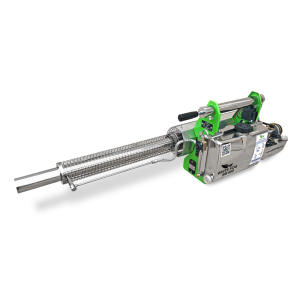
Reviews
There are no reviews yet.